The Project Challenge
Ground conditions can change both the foundation solution and the construction approach.
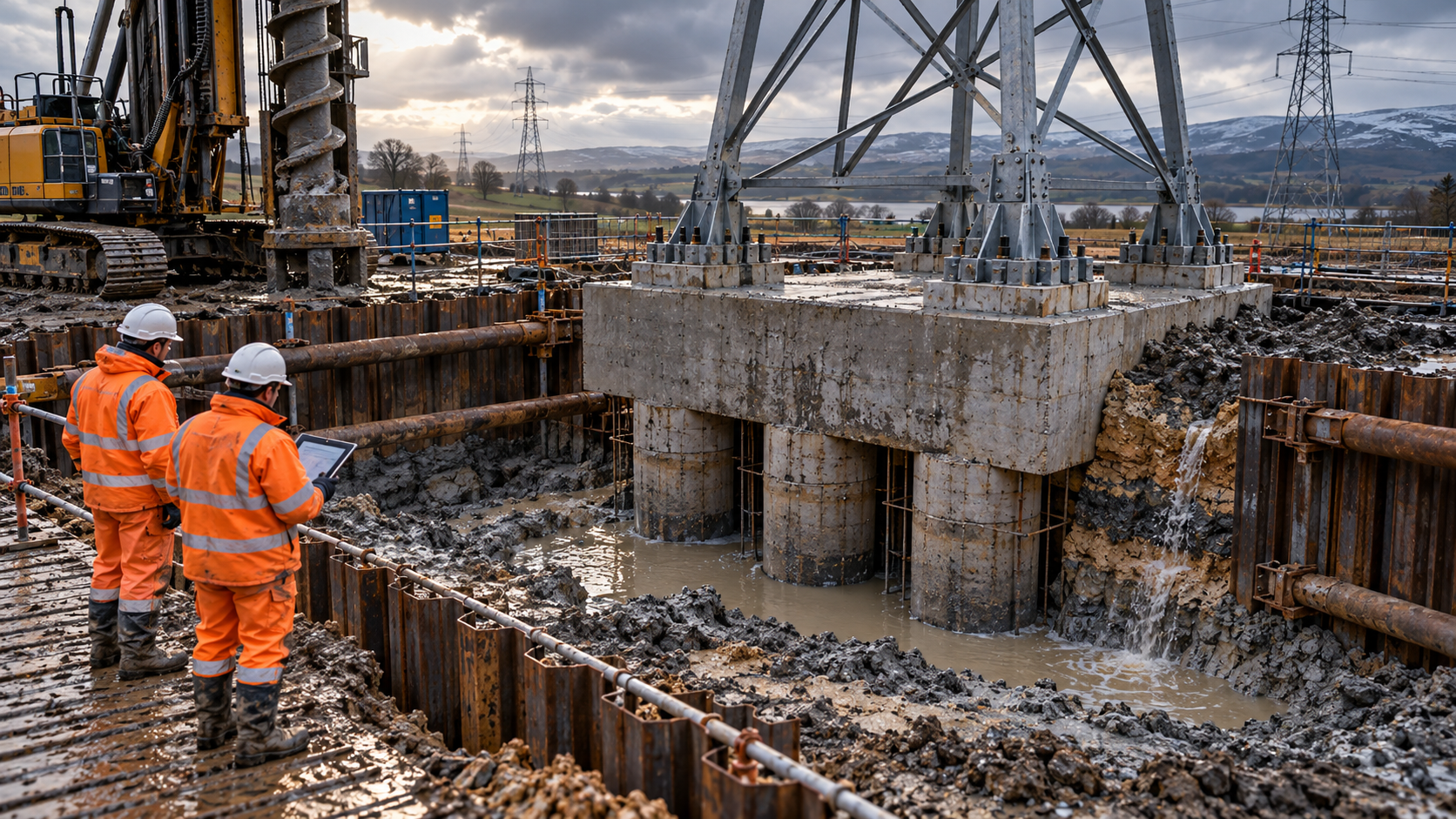
Transmission foundation works may encounter variable soils, weak or unstable ground, groundwater or local changes between structure positions. These conditions can influence excavation stability, drilling or piling requirements, working-platform needs and the type of foundation that can be practically delivered.
The engineering approach therefore needs to connect available ground information with structural requirements, construction methodology, plant capability and site conditions so that risks are understood before work progresses.
What Needs to Be Understood
Foundation decisions depend on understanding how the ground may behave during construction and in service.
Ground conditions can vary between structure locations and can affect excavation, drilling, groundwater control, working platforms and foundation performance. Available information needs to be considered together before the foundation approach is developed.
Ground Profile & Variability
Available ground investigation information, soil and rock conditions, depth changes and variability between locations help define the assumptions used for foundation development.
Groundwater & Excavation Conditions
Groundwater levels, seepage, excavation stability and the potential need for support or water control can influence how foundation works are planned and carried out.
Plant & Working Platform Requirements
Ground bearing conditions, access and working-platform requirements need to support the plant and construction activities proposed for excavation, drilling or piling.
Foundation & Construction Response
Ground conditions need to be considered alongside tower reactions, foundation geometry and construction methodology so that the selected approach remains practical for the site.
Our Support
Engineering that responds to the ground conditions encountered on site.
Ground Information Review
Review available ground investigation information, groundwater conditions, site variability and construction constraints to understand the factors that may influence the foundation approach.
Foundation Approach Development
Develop foundation and construction approaches around ground conditions, tower requirements, excavation or drilling needs and practical site delivery.
Construction & Site Support
Provide engineering and site support where ground conditions affect excavation, piling or drilling, working platforms, groundwater control, reinforcement and concrete operations.
Verification & Site Response
Support engineering checks, survey information, inspection records and responses to ground conditions encountered during construction through to project close-out.
Ground Conditions In Construction
Ground behaviour needs to remain connected to the construction method.
Available ground information provides the basis for planning, but actual conditions can vary across a site. Excavation stability, groundwater, drilling response, plant support and conditions encountered during construction all need to be considered as the works progress.
Ground variability
Changes in soil, rock or depth between structure locations can affect excavation, drilling, foundation geometry and the construction approach required at each position.
Groundwater & water control
Groundwater, seepage or water entering excavations can affect stability, access and concrete operations and may require appropriate control during construction.
Excavation stability & support
Excavation depth, ground behaviour and available working space need to be considered when determining whether temporary support or other controls are required.
Drilling & piling conditions
Where bored or piled foundations are used, drilling response, bore stability, casing requirements and conditions at formation level can influence how the foundation is constructed.
Working platforms & plant support
Working areas need to provide suitable support for the excavators, piling or drilling equipment and other plant required to carry out the foundation works.
Conditions encountered on site
Observed ground conditions, excavation or drilling records, survey information and engineering checks help identify differences from assumptions and support appropriate site responses.
Typical Project Journey
From ground information to verified foundation delivery.
Ground Information Review
Review available ground investigation data, groundwater information, site variability and known construction constraints for each structure location.
Foundation & Construction Planning
Develop the foundation and construction approach around ground conditions, tower requirements, excavation or drilling needs, plant capability and working-platform requirements.
Site Readiness
Confirm access, working platforms, setting out, service checks and other controls required before excavation, drilling or piling begins.
Foundation Construction
Carry out excavation, drilling or piling where required, together with reinforcement, interfaces and concrete operations in accordance with the agreed approach.
Ground Condition Response
Record conditions encountered during excavation or drilling and use engineering checks to respond where actual conditions differ from those anticipated.
Verification & Close-Out
Complete survey checks, inspections, construction records, quality information and as-built documentation through project close-out.
Project Outputs
Project information that records ground conditions and foundation delivery.
Depending on the agreed scope, AI Engineering can provide engineering, survey and construction information that records ground conditions, supports foundation decisions and maintains traceability through site changes, verification and close-out.
Outputs are agreed for each project and provided where relevant to the project scope.